Delete Everything: The Wild Trend of Nuking Your Entertainment Apps (And Loving It)

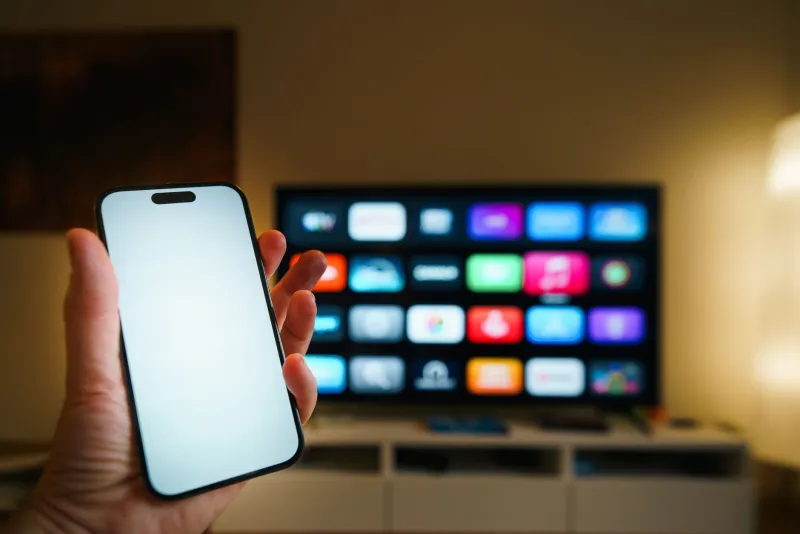
Picture this: It's Friday night. You've got nowhere to be, a couch that feels like a cloud, and approximately four hours of pure, unstructured leisure time stretching out in front of you like a golden highway to joy. You pick up your phone. You open an app. You scroll. You close it. You open another one. You scroll some more. Forty-five minutes later, you've watched nothing, played nothing, and somehow feel more exhausted than when you started.
Congratulations. You've experienced choice overload, and it's eating your fun alive.
Here at Yakabu, we are deeply, professionally, and personally invested in you having a good time. So when we started hearing about people who were voluntarily torching their entire digital entertainment ecosystems—deleting apps, canceling subscriptions, going full minimalist on their media diet—we had to investigate. Because either these people had discovered something genius, or they needed a wellness check.
Spoiler: it was the genius thing.
Your Brain on Too Many Options (It's Not Pretty)
Psychologists have a name for what happens when you face too many choices: the paradox of choice. Coined by researcher Barry Schwartz, the idea is simple and deeply annoying—more options don't make us happier. They make us anxious, indecisive, and ultimately less satisfied with whatever we do pick, because our brains are busy mourning everything we didn't choose.
Now apply that to modern entertainment. The average American household subscribes to four or more streaming services. Add in social media platforms, mobile games, podcasts, YouTube rabbit holes, and whatever Twitch has going on at any given moment, and you're essentially standing in a buffet the size of Montana, paralyzed between the macaroni and the sushi.
"I had seventeen apps on my phone that were specifically for entertainment," says Marcus, a 34-year-old project manager from Austin, Texas, who went through what he calls his "great purge" last spring. "Seventeen. I counted. And I was bored every single weekend. That's when I realized something was deeply broken."
Marcus deleted fourteen of them. He kept one game, one streaming service, and his podcast app. Within two weeks, he told us, he'd finished three books, started cooking elaborate weekend dinners, and—crucially—actually enjoyed the one show he was watching because it was the only show he was watching.
The FOMO Trap (And Why It's a Lie)
Here's the thing nobody tells you about FOMO: it's not really about missing out. It's about the possibility of missing out, which is somehow worse. When you have seventeen entertainment apps, you're not just consuming content—you're also quietly managing the anxiety that somewhere, on one of those other apps, something better is happening.
Delete the apps, and a funny thing happens. The FOMO evaporates. Not immediately—the first few days of an entertainment cleanse reportedly feel a little like forgetting your phone at home, that phantom-limb sensation of reaching for something that isn't there. But then? People describe a kind of calm that's almost suspicious.
"I kept waiting to feel like I was missing something," says Priya, a 28-year-old graphic designer from Chicago who cut her streaming subscriptions from five down to one. "But mostly I just felt... lighter? Like I'd been carrying this invisible backpack full of content I owed it to myself to watch, and I finally just put it down."
This tracks with what behavioral researchers have found: when we reduce our options, we tend to commit more fully to what remains. We stop auditing our entertainment choices mid-experience—second-guessing whether we should be watching this instead of that—and we actually just, you know, enjoy the thing.
How to Do Your Own Entertainment Cleanse Without Losing Your Mind
Okay, we're not here to tell you to throw your phone into a river and take up whittling. This is Yakabu. We love a good game, a great show, and a deep scroll through something delightful. The goal isn't deprivation—it's curation. Here's a practical way to audit your entertainment life without going full hermit:
Step 1: Do the inventory. Seriously, count your apps. All of them. Every streaming service, every game, every social platform you technically still have installed but haven't opened since 2022. Write the number down. Sit with it. Feel the feelings.
Step 2: Apply the 30-day rule. If you haven't genuinely enjoyed something in the past 30 days, it gets the boot. Not paused, not "I'll get back to it"—deleted. You can always redownload. The point is to break the passive ownership habit.
Step 3: Pick your anchors. Choose two or three entertainment sources that actively bring you joy—not obligation, not habit, but actual this is fun energy. These are your keepers. Everything else is on probation.
Step 4: Sit in the discomfort. The first week of a reduced entertainment diet feels weird. Lean into it. That boredom you're feeling? Researchers at the University of Central Lancashire found that boredom actually increases creativity and motivation. Your brain is recalibrating. Let it.
Step 5: Reassess monthly. Entertainment needs change. Maybe you finished that one game and want to add something new. Cool. But do it intentionally, not reflexively.
What People Are Discovering on the Other Side
The stories coming out of the entertainment-cleanse community (yes, it's a community—there are Reddit threads, obviously) share a weirdly consistent theme: people aren't just less stressed. They're having more fun.
Marcus from Austin started hosting monthly board game nights after his purge. Priya from Chicago picked up watercolor painting. A 41-year-old teacher from Portland named Dave—who deleted everything except one sports app and a single podcast—told us he'd started going to actual live comedy shows and rediscovered that laughing with a room full of strangers is "basically a drug."
None of these people describe themselves as anti-technology. They're not off the grid. They just made a deliberate choice to stop letting their entertainment consume them and started consuming it on their own terms.
And maybe that's the real punchline in all of this: in a world designed to capture as much of your attention as possible, the most rebellious thing you can do is decide exactly how much of it you're willing to give.
Your couch is still there. Your Friday night is still yours. You just might need to delete a few things before you can actually enjoy it.