Your FYP Knows Your Deepest Secrets and Honestly It's a Little Creepy
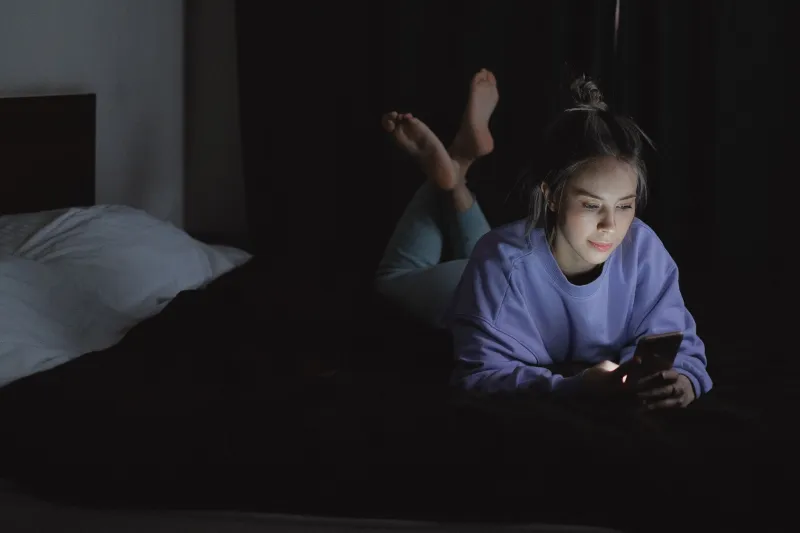
Somewhere between the fourteenth video of someone reorganizing their pantry and the third consecutive clip of a golden retriever doing something emotionally devastating, it hits you: this app knows me. Not your-mom-knows-you knows you. Not your-therapist-knows-you knows you. Something weirder. Something more accurate. Something that somehow understood your hyperfixation on vintage camper van restoration before you even knew it was a hyperfixation.
Welcome to the era of algorithmic intimacy. Population: all of us, whether we like it or not.
The Recommendation Engine That Became Your Mirror
Here's the thing nobody tells you when you first download TikTok or open Instagram Reels for what you swear will be "just five minutes": the algorithm is not trying to entertain you. It is trying to understand you. Every pause, every replay, every three-second hover over a video you didn't even consciously register — it's all data. It's all you, distilled into a behavioral fingerprint that is, frankly, more detailed than anything you'd voluntarily put in a journal.
Researchers have actually studied this. A 2022 study out of the University of Southern California found that people's algorithmic feeds can predict personality traits — things like openness, neuroticism, and conscientiousness — with surprising accuracy, often more reliably than self-reported surveys. Which is a polite academic way of saying: the app knows you better than you know yourself.
And the wild part? Most of us have just... accepted this. Leaned into it, even.
Why Your FYP Feels Like Therapy (But Cheaper)
There's a reason people screenshot their For You Pages and send them to friends with the caption "this is literally just my brain." The FYP has become a kind of external self-portrait — a collage of your anxieties, your aesthetics, your guilty pleasures, and your deeply specific niche interests that you've never mentioned out loud to another human being.
Dr. Pamela Rutledge, a media psychologist who has written extensively about social media behavior, describes this as "algorithmic mirroring" — the experience of seeing your own psychological state reflected back through curated content. When you're going through a rough breakup and suddenly your entire feed is sad indie music and "healing era" affirmations you didn't ask for, that's not coincidence. That's the app reading your engagement patterns and serving you content that matches your emotional frequency.
And here's the uncomfortable truth: it feels good. Being seen — even by a machine — scratches a deeply human itch. We are wired for recognition. For the feeling that someone, somewhere, gets it. Gets us. The algorithm has figured out how to simulate that feeling at scale, and we are absolutely powerless against it.
The Six Stages of Accepting Your Algorithm Knows You
For the uninitiated, here is the standard progression:
Stage 1 — Denial. "I just liked a few cooking videos. This doesn't mean anything."
Stage 2 — Confusion. "Why is my FYP full of videos about people who live in tiny houses and have strong opinions about cast iron skillets?"
Stage 3 — Recognition. "...Oh. Oh no. This is me. This is who I am."
Stage 4 — Surrender. You stop fighting it. You let the algorithm lead.
Stage 5 — Evangelism. You start describing your FYP to friends like it's a personality test. "My For You Page is, like, dark academia meets chaos goblin with a soft spot for competitive dog grooming. What's yours?"
Stage 6 — Dependency. You feel genuinely disoriented when you log into a new account or someone else's phone and the feed is wrong. It doesn't know you. It's showing you things for other people. The horror.
When Algorithmic Intimacy Gets Weird
Of course, it's not all pantry organization and golden retrievers. The same mechanism that serves you cozy content at midnight can also serve you content that is uncomfortably on-the-nose. People have reported their FYPs surfacing videos about anxiety management during stressful work weeks they hadn't posted about. Others have clocked their feeds shifting toward grief content after losing someone — before they'd even processed the loss publicly.
This is where the "it's just math" argument starts to fall apart emotionally. Because even if you understand, intellectually, that it's pattern recognition and engagement data and nothing more, it doesn't feel like that. It feels like something is paying attention. And in a world where most of us feel perpetually under-seen and overwhelmed, that feeling — however manufactured — is hard to shake.
There's also the question of the content you're embarrassed about. The niche stuff. The 47-minute deep dive into competitive axe throwing that you watched at 1 a.m. on a Tuesday. The algorithm logged that. It will remember. It will bring axe throwing back around when you least expect it, and you will watch it again, and you will feel known.
What Does It Mean That We're Fine With This?
Here's the question worth sitting with: if a company sent a representative to your house to observe your behavior, catalog your emotional responses, and use that data to influence what you consume — you'd call a lawyer. You'd be on the news. You'd be furious.
But the app does it, and we post memes about how accurate our FYP is. We share our algorithmic profiles like horoscopes. We feel grateful.
Maybe that says something about loneliness. Maybe it says something about how underserved we feel by traditional media that never quite got us. Maybe it just says we've normalized surveillance in a way that would have seemed dystopian fifteen years ago and now just seems like Tuesday.
Or maybe — and this is the charitable reading — it says that humans are endlessly adaptable. That we find connection wherever we can. That we are, at our core, creatures who want to be understood, and we'll take that understanding wherever it comes from, even if it comes from a server farm in California that doesn't actually care about us at all.
Your FYP doesn't love you. But it does know that you've been stress-watching renovation content for three weeks, and it's going to keep serving you kitchen remodel videos until you work through whatever that's about.
Honestly? Same, algorithm. Same.