You Hate This Franchise. You've Seen Every Single Installment. Welcome to the Club.
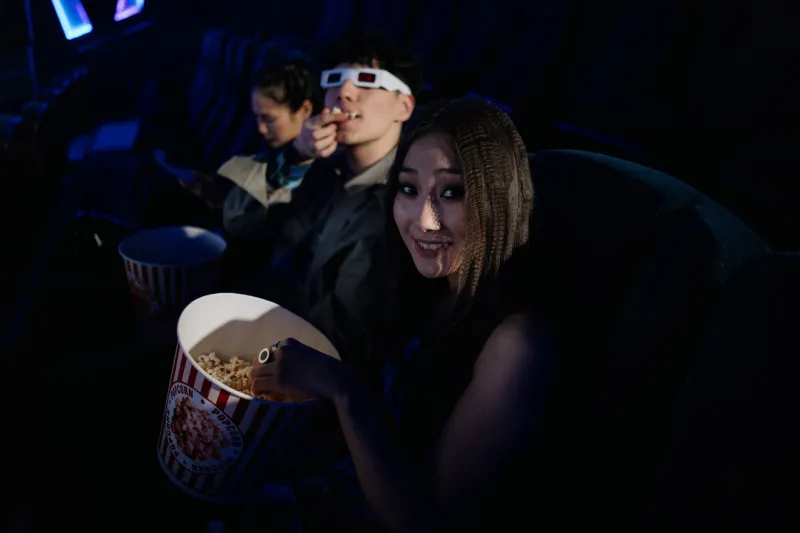
Somewhere in America right now, a person is clearing their Saturday calendar. Not for a wedding. Not for a sporting event. Not even for a truly elite brunch situation. They are clearing their Saturday so they can drive to a theater, pay fourteen dollars for a soda, and spend two hours loudly whispering "this is so bad" at a movie they absolutely cannot wait to see.
This is not a cry for help. This is a lifestyle.
Welcome to what we at Yakabu are officially dubbing the Hate-Watch Cinematic Universe — a sprawling, deeply committed fandom built entirely on ironic devotion, passionate mockery, and the kind of emotional investment that would embarrass most people if they thought about it for more than thirty seconds.
So What Even Is a Hate-Watch Franchise?
Let's be precise here, because nuance matters when you're this unhinged about something you claim to dislike.
A hate-watch franchise is not just a bad movie. Bad movies are everywhere. A hate-watch franchise is a series of bad movies — or shows — that has somehow accumulated enough installments to develop its own internal mythology, recurring characters, and plot logic so baffling it has become its own art form. Think: a fast car franchise that started about street racing and somehow ended up in space. Think: a horror series where the villain dies in a completely definitive way in every single film and then shows up again forty-five minutes into the next one. Think: basically any shared cinematic universe that greenlit a seventh entry despite critical scores that would make a participation trophy look prestigious.
The key ingredient? You keep coming back. And you bring snacks.
The Characters Are Terrible and We Are Emotionally Destroyed by Them
Here's the part nobody wants to admit: hate-watch audiences have parasocial relationships with these characters. Deep ones. Embarrassingly specific ones.
There's always that guy in the franchise — the one whose motivations make no sense, whose dialogue sounds like it was generated by an AI trained exclusively on bumper stickers, and whose survival from film to film defies every known law of physics and narrative consequence. And yet. And yet. When something happens to that guy, people feel things. Real feelings. The kind of feelings that prompt full Reddit threads with titles like "Okay but hear me out" followed by a 900-word defense of a character who once delivered the line "Family isn't just blood. It's also cars."
This is not casual viewing. This is parasocial commitment wearing a sarcastic T-shirt.
The hate-watch relationship with characters is actually more intense than normal fandom in some ways, because you're holding two emotional states simultaneously: genuine affection and performed disdain. That's advanced mental multitasking. That's practically a skill.
Why We Schedule Our Lives Around Stuff We Claim to Despise
Psychologists have a few theories. Entertainment researchers have a few more. But here at Yakabu, we have the most honest explanation: irony is a socially acceptable wrapper for genuine enthusiasm.
We live in an era of endless choice. There are more streaming platforms than most people have clean forks. Every week brings seventeen new prestige dramas, each one featuring an actor from The Wire and a cinematographer who studied under someone European. The pressure to have good taste — curated taste, defensible taste — is exhausting.
Hate-watching removes that pressure entirely. You're not into this franchise. You're studying it. You're a critic. You're above it, technically, while also being completely inside it, emotionally. It's the entertainment equivalent of ordering a deep-fried Oreo and explaining that you're doing it ironically. Nobody believes you. That's fine. It's delicious.
The scheduling aspect is also real and worth examining. People who hate-watch franchises often coordinate viewing parties, group chats, and countdown timers with the same energy that normal fans deploy for things they like. There's a group chat called something like "The Suffering Continues" where twelve adults are currently arguing about whether the third or fifth installment was the most narratively offensive. They have been arguing since Tuesday. No resolution is expected.
The Plot Points Are the Lore Now
Every hate-watch franchise eventually develops something remarkable: the fans know the lore better than the writers do.
Because when you're watching critically, with the lights on and your sarcasm fully charged, you notice everything. You notice the continuity errors. You notice the callback that contradicts the second movie. You notice that a character who was explicitly established as having a fatal allergy to something is eating that thing in the background of a scene in the sixth installment. And you document it. You make videos about it. You make TikToks that get four hundred thousand views and a comment section that is just people typing "WAIT" in all caps.
This documentation becomes its own form of storytelling. The hate-watch audience is essentially writing the real canon — a shadow franchise that runs parallel to the official one, funnier and more coherent than anything the studio produced.
What It Says About Us (Nothing Too Damning, Relax)
Here's the generous read, and we're going with it: hate-watching franchises is actually a sophisticated form of community building. You need shared references, running jokes, a collective memory of specific bad moments, and the willingness to show up again and again. That's basically the same infrastructure as loving something.
The only difference is the official stance. And in 2025, with irony baked into basically every layer of pop culture, the official stance barely matters. What matters is whether you're there, whether you care, and whether you've already purchased your ticket for the next one.
(You have. We all have. Stop pretending.)
The Hate-Watch Cinematic Universe Is Expanding
New franchises are being inducted every year. A reboot that nobody asked for becomes a hate-watch staple by its third episode. A sequel that arrives fifteen years too late gets a whole podcast dedicated to dissecting it with the energy of a graduate thesis. The universe grows.
And the people inside it? They're having a genuinely great time. They're laughing, they're bonding, they're building the kind of shared cultural experience that prestige television sometimes struggles to create despite all its effort and its actors from The Wire.
So the next time someone asks what you're doing this weekend and you have to explain that you're going to see the seventh movie in a franchise you've described as "a crime against editing" — just own it. You're a citizen of the Hate-Watch Cinematic Universe.
Residency has its perks. The community is unhinged in the best way, the commentary is elite, and the movies will never, ever get better.
That's kind of the whole point.