Your Spotify Knew You Were Getting Divorced Before You Did
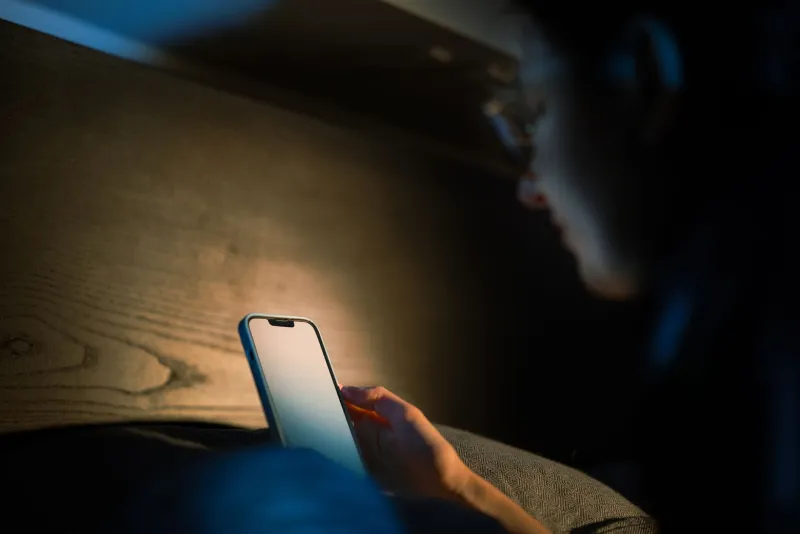
Somewhere between your fourteenth consecutive listen of a breakup playlist you didn't consciously build and the moment Netflix started recommending documentaries about "starting over," an algorithm quietly filed a report. The subject line? Something's wrong with this one.
We like to think of our entertainment choices as casual, low-stakes decisions. You pick a show because the thumbnail looked cool. You let a playlist autoplay because you were too tired to choose. But buried in those lazy, half-asleep clicks is a data portrait so accurate it would make your therapist jealous — and data scientists are increasingly paying attention.
The Feed as a Subconscious Leak
Here's the uncomfortable truth: your brain starts processing major life changes weeks, sometimes months, before you consciously acknowledge them. Stress hormones shift. Sleep patterns wobble. You start reaching for different things — slower music, darker storylines, shows where the main character quits their job and moves to a cabin.
Algorithms don't know why you're doing this. They just know you are. And they respond accordingly.
Dr. Rachel Mendez, a behavioral data researcher who has consulted for several streaming platforms (and asked that we not name them specifically because, her words, "the NDAs are unhinged"), describes it plainly: "The model isn't reading your mind. It's reading your behavior. But your behavior is your mind, expressed. When someone's consumption patterns shift dramatically — genre pivots, session length changes, binge velocity dropping — that's almost always a signal of something happening in their offline life."
In other words, you started watching three-hour slow-burn dramas about people who feel trapped in their careers before you handed in your resignation letter. The algorithm noticed first.
Real People, Eerily Real Stories
We put a call out on social media asking if anyone had experienced this phenomenon, and the responses were genuinely unsettling in the best possible way.
Jamie, 31, from Austin, Texas, told us that about four months before she ended a long-term relationship, her Spotify Discover Weekly started filling up with what she calls "sad girl autumn energy" — think Phoebe Bridgers, Sufjan Stevens, music with the emotional density of a wet wool sweater. "I wasn't sad," she said. "Or I didn't think I was. I just thought I was going through a mood. Then one day I realized I had been crying in my car every Tuesday on the way to work for a month and maybe that was information."
Then there's Marcus, 27, from Atlanta, who noticed that YouTube's algorithm started serving him content about freelancing, remote work, and "escaping the 9-to-5" roughly six months before he actually quit his corporate job. "I thought I was just casually interested," he laughed. "But looking back, I was clearly workshopping the decision without telling myself I was workshopping it."
This isn't coincidence. This is your subconscious using your entertainment choices as a rehearsal space.
The Architecture of Anticipation
So how does this actually work, mechanically? Modern recommendation systems don't just track what you watch — they track how you watch it. Do you finish episodes? Do you rewind certain scenes? Do you pause, sit there for a second, and then close the app entirely? All of that feeds into a behavioral fingerprint that's updated in near real-time.
When that fingerprint starts changing, the algorithm doesn't panic. It adapts. It starts surfacing content that matches your new emotional frequency, which in turn surfaces more content in that zone, which in turn makes you feel weirdly understood by your phone.
This is where it gets philosophically interesting: is the algorithm a mirror, or is it a nudge? If Netflix keeps recommending shows about people who reinvent themselves in their thirties, are you watching them because you're already headed that direction — or are you heading that direction because you've been watching them?
"Both," says Mendez. "It's a feedback loop. The algorithm responds to who you're becoming, and then accelerates the process by surrounding you with content that normalizes that direction. It's not manipulation, exactly. It's more like... the world's most attentive hype person."
When the Feed Gets It Wrong (And What That Means)
Of course, algorithms are not oracles. They misread signals constantly. Sometimes your "dark documentary phase" is just you being bored on a rainy Sunday, not evidence of an impending existential crisis. Sometimes the breakup playlist is just a vibe.
But even the misses are interesting. When the algorithm overcorrects — when it decides you're in crisis mode and you're actually fine — the mismatch can be clarifying. You notice the feed feels wrong. You actively push back, search for something lighter, something funnier. That friction is its own kind of self-knowledge.
The algorithm's error becomes a mirror in a different way: it shows you who you aren't right now, which sometimes tells you more than confirmation would.
What You Can Actually Do With This Information
Here's the Yakabu take: don't be scared of your feed. Be curious about it.
Next time you notice a shift in what you're gravitating toward — suddenly obsessed with minimalism content, or can't stop watching shows about people who move to foreign countries, or you've queued up every documentary about people who left high-pressure careers — sit with that for a second. Not in a therapy-homework kind of way. Just in a huh, that's interesting kind of way.
Your entertainment choices are the most honest diary you keep, precisely because you don't think of them as a diary. Nobody performs their Netflix queue for an audience. Nobody curates their Spotify listening for clout at 2 AM when they can't sleep.
That's the data that's real. And the algorithm, for all its corporate creepiness, is reading it with remarkable accuracy.
Your feed might not know your future. But it probably knows your present better than you do.
And honestly? That's either deeply comforting or wildly alarming, depending on what your Discover Weekly looks like this week.