Congrats, You're Watching Five Shows Simultaneously and Have Seen Zero Finales
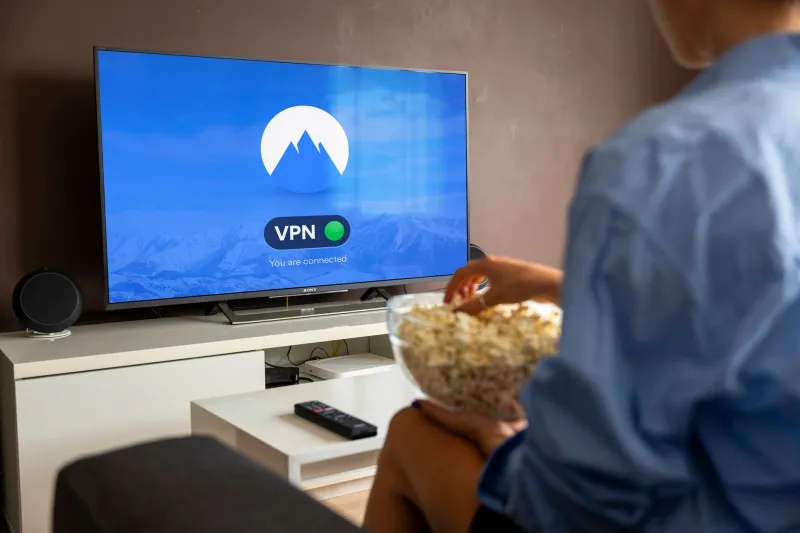
Let's paint a picture. It's Tuesday night. You've got a half-eaten bowl of popcorn, a couch that knows your exact body shape, and roughly 47 streaming services loaded on your TV. You open Netflix, scroll for eleven minutes, and then — just to keep your options open — you flip over to Hulu, then Max, then maybe that one Apple TV+ show everyone keeps mentioning at brunch. An hour later, you've watched approximately twenty-two minutes of four different shows and committed to exactly none of them.
Sound familiar? Of course it does. Welcome to the golden age of entertainment paralysis, where we have more content than any human civilization in history and somehow feel like there's nothing to watch.
Your Brain Is Not Broken. It's Just... Overwhelmed.
Here's the thing nobody tells you when you're signing up for your sixth streaming service: more choices don't make you happier. Psychologists have been screaming about this since the early 2000s, but we were too busy watching DVDs to listen. The concept is called choice overload, and it's basically what happens when your brain gets handed a menu the size of a phone book and quietly short-circuits.
Back when there were four TV channels and a VHS rental store with three copies of the new releases, commitment was easy. You watched what was on. You finished it. You moved on with your life. Now? You've got an algorithm serving you a personalized buffet of ten thousand options, each one promising to be the show that changes your life. The result is that you start everything and finish nothing, drifting through a fog of half-watched pilots like some kind of haunted content ghost.
Psychologists call the anxiety that comes from too many choices "the paradox of choice." We at Yakabu call it "a Tuesday."
The 'Always Available' Problem Nobody Warned Us About
Here's a wild thing about binge-watching culture: it was actually easier to finish shows when you had to wait for them. Weekly episodes created a ritual. You showed up, you watched, you talked about it at the water cooler (or, more recently, in a Discord server at 1 a.m.). The scarcity of when gave you a reason to prioritize.
Streaming flipped that entirely. When every episode of every season is available right now, forever, your brain quietly files it under "I can watch that anytime" — which, in human psychology, is basically the same as "I will never watch that." It's the same reason you have seventeen browser tabs open that you've been "meaning to read" since 2021.
The always-available nature of streaming doesn't feel like freedom. It feels like homework that never has a due date. And we all know how that goes.
Multi-Show Juggling: A Coping Mechanism in Disguise
So why do we keep starting new shows if we can't finish the ones we already have going? Turns out, starting something new gives your brain a little hit of dopamine — the same chemical responsible for why you check your phone forty times a day and why you downloaded three new games last week and opened none of them. The anticipation of a fresh story, new characters, and unexplored plot lines is genuinely exciting in a way that episode seven of a show you're already invested in... isn't.
There's also the social pressure element. Someone at work mentions a show. Your group chat explodes about a new season drop. A TikTok clip gets seventeen million views and suddenly you have to see what that's about. Before you know it, you're juggling a prestige drama, a reality competition, a true crime docuseries, and a comfort rewatch of something you've already seen three times — all at once, all in various states of incompletion.
You're not watching TV anymore. You're managing TV.
The Rewatch Safety Net (And Why We Love It)
Notice how, when the pressure of choosing something new gets genuinely overwhelming, you almost always land on something you've already seen? There's a reason "The Office" and "Friends" have been in Netflix's top ten basically since the app was invented. Rewatches are safe. You know what you're getting. There's no commitment anxiety because you're not making a new decision — you're revisiting an old one that already worked out.
In a landscape of infinite novelty, the familiar is a genuine comfort. Your brain gets the entertainment hit without the cognitive labor of tracking new characters, plotlines, and lore. It's the streaming equivalent of ordering your usual at a restaurant when the menu is just too much.
Is it a little sad that we've built the most expansive entertainment ecosystem in human history and our comfort move is rewatching Dwight Schrute run a beet farm for the fifth time? Maybe. But also — can you blame us?
So What Do You Actually Do About It?
Glad you asked, because we're not just here to roast your watch history. We've got thoughts.
Pick one show and treat it like a commitment. Not a vague intention — an actual, scheduled thing. Tuesday nights are for that show. Block it off. Tell your friends. Make it an event. Turns out, artificial scarcity still works even when you create it yourself.
Use the two-episode rule. If you're not hooked by episode two, you're allowed to quit. Not everything is for you, and the sunk-cost fallacy has ruined more evenings than we can count. Give it a real shot, and if it's not clicking, move on without guilt.
Limit your active shows. Two to three maximum at any given time. One drama, one comedy, one "whenever" comfort watch. That's it. The rest of the list can wait — and it will still be there, because that's the whole point of streaming.
Accept that you will never watch everything. This one's the hardest, but it's also the most liberating. There is more content being produced right now than any human could consume in a thousand lifetimes. You are not behind. You are not missing out. You are a person with finite hours, and that's okay.
The Bigger Picture (Pun Intended)
The streaming era gave us something genuinely remarkable: access to an almost incomprehensible library of human storytelling, available on demand, at a fraction of what it used to cost. That's not nothing. That's actually pretty incredible.
But it also quietly rewired how we relate to entertainment — turning it from a shared, communal, finite experience into an endless, personalized, always-on feed that our brains were never really built to navigate. We're all doing our best out here, toggling between apps, starting pilots, losing our place, and occasionally — occasionally — actually finishing something and feeling a little smug about it.
So the next time you're forty minutes into your third new show of the evening and you still haven't picked one, just know: it's not a character flaw. It's a design problem. And you're in very, very good company.
Now go finish that show. You know the one.