Your Streaming Service Knows You're Going Through Something — And Honestly, It's Kind of Sweet
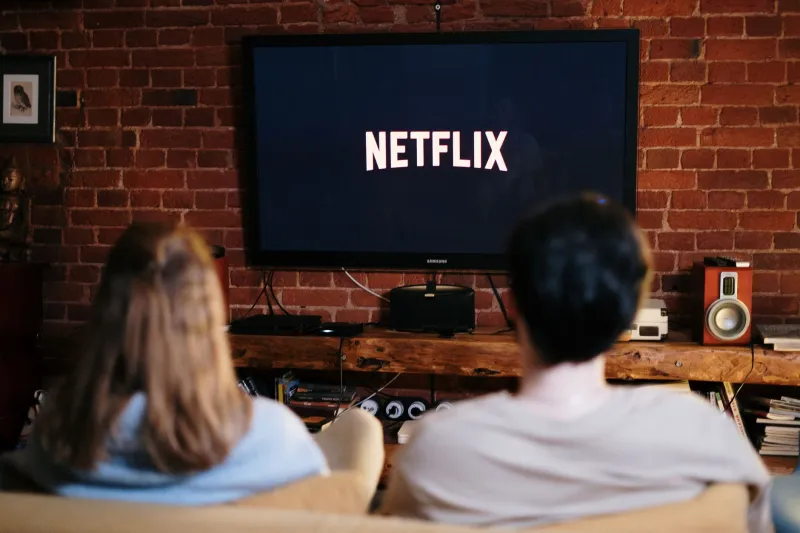
Let's set the scene. It's a Tuesday night. You've had a day that could generously be described as "a lot." You flop onto the couch, open Netflix, and right there — front and center, practically glowing — is the exact comfort movie you didn't know you needed until this very second. Not the prestige drama everyone's been posting about. Not the trending thriller. That movie. The one you watched in college when you were sad about something you've since forgotten.
You didn't search for it. You didn't ask for it. The algorithm just... knew.
And instead of feeling surveilled, you felt seen.
Welcome to the weirdest parasocial relationship of the 21st century — the one you have with a piece of software that has never once asked how your day was but somehow always knows the answer.
What the Algorithm Is Actually Doing (No, It's Not Magic, But Also Kind of Magic)
Here's the thing about recommendation engines: they're not psychic, but they're doing something almost more impressive. They're pattern-matching at a scale that no human brain could replicate without a serious amount of caffeine and a whiteboard the size of a football field.
Netflix's recommendation system, for example, doesn't just track what you watch — it tracks how you watch. Did you pause halfway through an episode and come back? Did you rewind a scene three times? Did you bail after eight minutes and never return? Every micro-decision you make while mindlessly scrolling at 11 p.m. is a data point being fed into a model that's quietly building a portrait of you that's frankly more accurate than your LinkedIn profile.
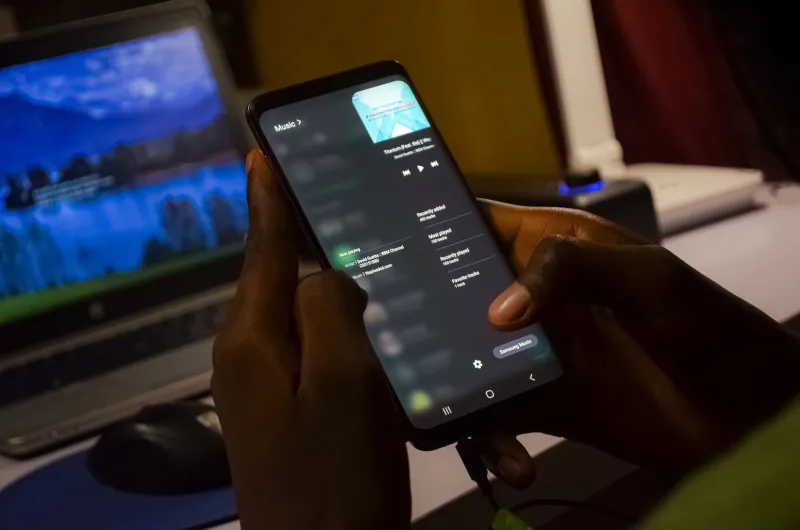
Spotify does something similar with its Discover Weekly and Daily Mix features. The algorithm is tracking not just what you play, but what you skip, what you replay, what you add to a playlist versus what you just let ride. It knows that you have a secret soft spot for early 2000s pop-punk that you would never admit to at a dinner party. It has known for years. It does not judge you.
Gaming platforms like Steam and the PlayStation Store have joined the party too, nudging you toward titles that share DNA with games you've already sunk hundreds of hours into. Didn't realize you were a "cozy simulation with light crafting elements" person? Your recommendation feed figured it out before you did.
The Part Where It Gets Weirdly Emotional
Here's where it stops being a tech explainer and starts being a vibe check.
For a lot of people — and there's actual research to back this up — the experience of getting a really good recommendation feels emotionally resonant in a way that's hard to explain. It's not just convenience. It's the sensation of being understood. And in a world where being truly understood by another human being requires years of friendship, a lot of vulnerability, and probably some therapy, the fact that an app can approximate that feeling in 0.3 seconds is... something.
Is it a replacement for real connection? Absolutely not. But is it a tiny, low-stakes version of that warm feeling you get when someone remembers your favorite order? Honestly? A little bit, yeah.
There's a reason people talk about their Spotify Wrapped like it's a personality test result. Or screenshot their Netflix "Top Picks" like they're character references. We've started treating these algorithmic reflections as mirrors — imperfect ones, sure, but mirrors nonetheless.
When the Algorithm Gets It Wrong (And Why That's Also Kind of Endearing)
Of course, the system isn't flawless, and its failures are spectacular in their own right.
Everyone has a story. You watched one true crime documentary for research purposes and now Netflix is convinced you're obsessed with cold cases. You let your nephew play a mobile game on your phone for twenty minutes and Spotify started recommending songs from Paw Patrol. You searched for a gift for someone else and now Amazon thinks you've developed a sudden passion for ergonomic gardening tools.
These misfires are actually kind of charming? They're a reminder that underneath all the sophisticated machine learning, the algorithm is essentially making its best guess based on incomplete information — which, if you think about it, is also what your friends are doing most of the time.
The difference is that when your best friend recommends the wrong movie, you can tell them about it over brunch. When the algorithm gets it wrong, you just keep scrolling. No hard feelings. It'll recalibrate.
Should You Be Weirded Out? (A Fair Question)
Look, it would be irresponsible to write an entire article about how your streaming apps know your soul without at least acknowledging the other side of this coin.
The same data collection that makes Discover Weekly feel like a gift is also a pretty significant accumulation of personal behavioral data by large corporations. The cozy feeling of being "understood" by an algorithm is, in part, a product of very deliberate UX design intended to keep you engaged longer. The recommendation engine isn't your friend — it's a retention tool that happens to be really good at its job.
That's worth keeping in mind. Not in a spiral-into-paranoia way, but in a "know what you're opting into" way. You can enjoy the convenience and the occasional eerie accuracy while also being a thoughtful adult about what it means that a tech company has a more detailed record of your emotional states than your own journal.
Both things can be true at once. The algorithm can be useful and a little ethically murky. Welcome to modern life.
The Takeaway (Or: It's Okay to Appreciate the Robot That Gets You)
At the end of the day, here's where Yakabu lands on this: the relationship you have with your recommendation algorithm is one of the stranger and more uniquely modern emotional dynamics of our time, and there's no shame in finding it comforting.
When the algorithm drops exactly the right song during a long drive, or surfaces a game that turns out to be your new obsession, or queues up the movie that makes you feel like everything is going to be okay — that's a small, genuine moment of joy. The fact that it was engineered doesn't make it fake. Lots of good things are engineered.
Just maybe also text your actual best friend once in a while. They can't predict your watch history, but they can meet you for tacos, and that's still something the algorithm hasn't figured out yet.
Play. Laugh. Explore. All Day Long — even when it's a robot doing the suggesting.