Pour One Out for Your Cancelled Show: A Survival Guide for the Streaming Era's Favorite Heartbreak
It starts the same way every time.
You find a show. It's weird and specific and funny in a way that feels like it was made for you, by people who somehow read your diary and turned it into television. The characters feel like friends. You recommend it to everyone you know with the urgency of a person who has discovered a cure for something. You tell your coworker about it. You tell your mom about it. You tell the guy at the coffee shop about it because he seemed like he'd get it.
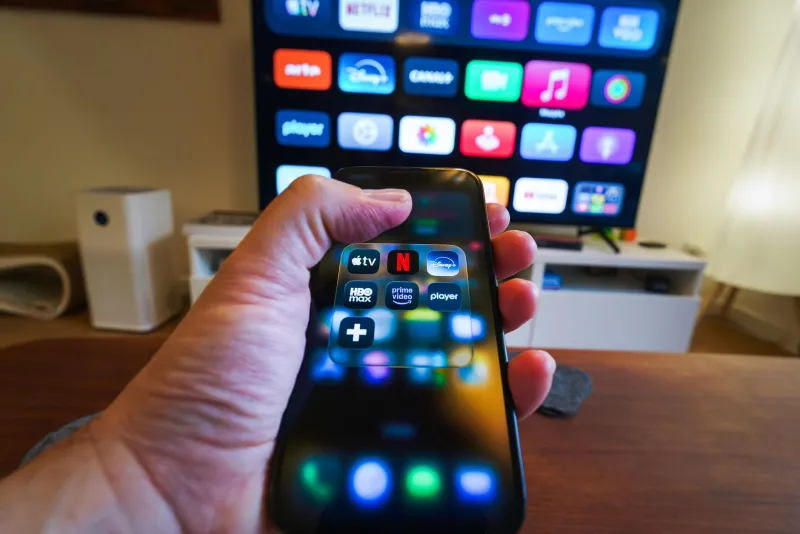
And then, somewhere between eighteen months and two years later, you open your streaming app to find the second season ended on a cliffhanger, there will not be a third season, and the show has been quietly removed from the platform like it was never there at all.
Congratulations. You have been cancelled on. Again.
The Cancellation Math Is Getting Worse
This is not your imagination. Shows are getting axed faster, more ruthlessly, and with less warning than at any point in television history — and the streaming wars are largely to blame.
The old broadcast model was brutal in its own way, but it had a certain transparency. Low ratings meant cancellation. The math was visible. Streaming platforms operate on metrics that are largely proprietary and occasionally seem to have been invented by someone spinning a wheel. A show can have millions of viewers and still get cut because those viewers aren't the right kind of viewers — the ones who signed up specifically for the platform because of the show, or the ones who are new subscribers rather than existing ones.
Networks are also under intense financial pressure right now. Several major streamers have pivoted hard toward profitability after years of content spending that resembled a very enthusiastic money fire. The result is a streaming landscape where shows live or die not just by viewership, but by licensing costs, talent deals, tax write-offs (yes, really — some shows get cancelled and deleted because it's financially advantageous), and executive decisions that have nothing to do with whether the story was any good.
The average viewer doesn't know any of this while they're watching episode six of a show they love. They're just watching episode six of a show they love. And then it's gone.
The Five Stages of Streaming Grief (Condensed for Efficiency)
For those who've been through this before, the grief cycle is familiar. But in the interest of your emotional bandwidth, here's a compressed version:
Denial: "Maybe there's a different streaming service that picked it up. Let me check. Let me check again. Let me Google it at 2 a.m."
Anger: Posting extensively on the show's subreddit. Writing a strongly worded tweet at the network's official account. The network does not respond. The tweet gets four likes, two of which are from people who also liked the show and are also furious.
Bargaining: Signing a petition. Buying merchandise to "show support." Rewatching the series hoping it somehow changes the outcome.
Depression: Staring at the streaming app's home screen for twenty minutes, unable to commit to anything new because what's even the point.
Acceptance: Starting a new show. Getting deeply attached to it. Noticing it has a 68% chance of renewal and immediately opening a new tab to research cancellation statistics.
Communities That Are Making Peace With the Wreckage
Here's something genuinely interesting happening in the margins of TV fandom right now: a growing number of viewers are leaning into the incompleteness rather than raging against it.
Online communities centered around cancelled shows — on Reddit, Discord, and fan wikis — have started framing unfinished series not as failures but as artifacts. There's a real philosophical reframe happening, and it's kind of compelling.
"We treat it like a found object," one moderator of a cancelled-shows Discord community explained in a recent thread that got a lot of traction. "The story didn't end the way it was supposed to. But neither does a lot of art. A building can be beautiful and unfinished. A song can fade out. We've started seeing cancelled shows the same way."
This framing has genuine merit. Some of the most discussed, most analyzed, most beloved shows in internet culture are ones that never got to finish their stories. The incompleteness becomes part of the text. Fans fill in the gaps with fan fiction, fan art, and elaborate theory threads that are sometimes more satisfying than the show's actual planned ending would have been.
There's a freedom in that. The story belongs to the fans now. Nobody can cancel that.
Practical Strategies for Protecting Your Emotional Investment
If the philosophical reframe isn't your speed, there are also some more tactical approaches that actual viewers have developed for navigating the current cancellation climate:
The Two-Season Rule. Don't fully commit until a show has survived two seasons. Watch season one with mild interest. If it gets renewed, then let yourself get attached. This sounds cold-blooded, but your heart will thank you.
Check the renewal odds before you binge. Sites that track cancellation and renewal probability exist, and they're more accurate than you'd think. Spending two minutes checking whether a show has been renewed before investing eight hours in it is just basic emotional due diligence at this point.
Go in with the mindset of 'this might be all there is.' Watch each season as if it might be the last. Appreciate the world-building, the character work, the individual episodes on their own terms rather than as chapters in a story that will definitely get finished. It won't always be the last season. But when it is, you'll be more prepared.
Find the cancelled-show communities. Seriously. The people in those spaces have developed a remarkable capacity for finding joy in fragments. They're also just fun to talk to, because they loved the same weird, specific thing you loved, and they're not done loving it.
The Counterintuitive Gift of the Cancelled Show
Here's the thing that's hard to see when you're in the grief stage: cancelled shows often become more meaningful over time, not less.
The shows that got to run for seven seasons and wrap everything up neatly are often the ones people stop thinking about. The cancelled ones become cult objects. They get discussed, theorized about, and returned to in ways that finished shows rarely are. The incompleteness creates a kind of gravitational pull.
There's also something quietly radical about loving a piece of art that the market decided wasn't worth keeping. It's a small act of resistance. The algorithm said no. The spreadsheet said no. And you're still here, still recommending it to strangers, still thinking about that season two cliffhanger.
The show got cancelled. Your investment in it didn't.
And in the streaming era, that might be the most you can ask for.