Shuffle, Don't Lie: What Your Playlist, Watch History, and Game Library Are Actually Saying About You

You can curate your Instagram. You can rehearse your answers in job interviews. You can absolutely lie to your therapist about how much screen time you actually logged last week.
But your Spotify Wrapped? Your Steam library? The fact that you've rewatched the same comfort show four times this year? Those don't lie. Those are the real you, unfiltered and unashamed, rendered in algorithm form.
Welcome to your unsolicited personality report. Don't worry — we're not judging. We're just... reading you with remarkable accuracy.
The Music Section (This One Hurts a Little)
Let's start with the most intimate data point: your playlist. Music is the entertainment category people are most defensive about, which tells us everything.
If your most-played genre is sad indie folk or acoustic singer-songwriter: You process emotions through other people's metaphors. You have strong opinions about what constitutes "authentic" art. You've definitely cried in a car at a volume you'd never admit to. You're emotionally intelligent to a degree that occasionally exhausts you.
If your library is pure hip-hop and R&B: You move with intention. You care about craft, lyricism, and cultural context. You also probably have better taste in sneakers than everyone around you, and you know it.
If you listen to hyperpop or 100 gecs-adjacent chaos music: You find traditional structure boring on a molecular level. You're either extremely online or you work in a creative field, and there's about a 60% chance it's both.
If your most-streamed playlist is literally just "Today's Top Hits" on shuffle: No shame. You're a pragmatist. You like what sounds good without needing a whole identity attached to it. Also, you have a lot going on and music is background noise, which is completely valid.
The most revealing thing isn't what genre you love — it's what you listen to at 2 a.m. on a Wednesday. That playlist is your internal monologue made audible.
Your Watch History Is a Mood Ring for Your Brain
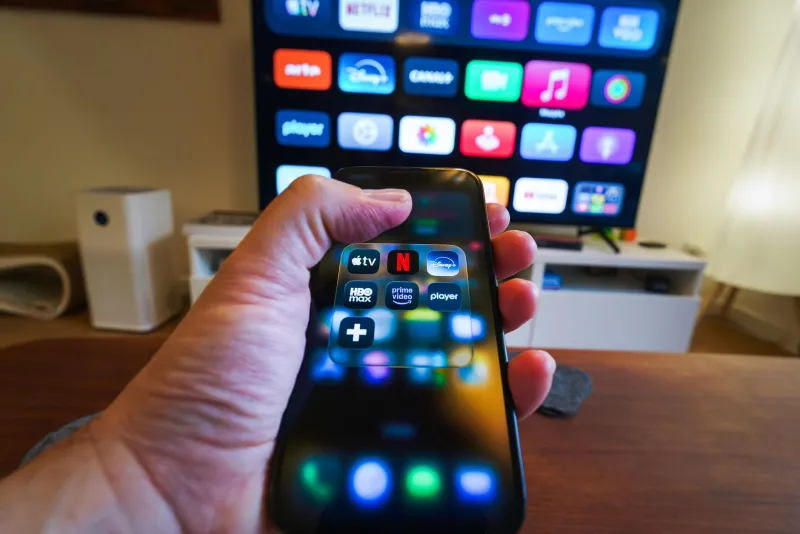
Streaming platforms know more about your emotional state than your closest friends do. Every time you scroll past the documentary about climate change and click on a reality competition show about baking, you're casting a vote for who you are right now versus who you aspire to be.
Comfort rewatch people — those rewatching the same show for the fourth time — are typically going through transitions. New job, new city, end of a relationship, beginning of a relationship. Familiar narratives are neurologically soothing; your brain releases lower cortisol when it already knows the ending. You're not being lazy. You're self-medicating with television, which is a very human and reasonable thing to do.
True crime obsessives tend to score high on curiosity and openness to experience, according to actual psychology research. They're also statistically more likely to be women, which says something interesting about who our culture has trained to think about personal safety as a constant background calculation.
Documentary bingers are the entertainment equivalent of someone who reads the entire menu before ordering. They want context. They want to understand the system. They will absolutely send you a follow-up text about something they watched two weeks ago because they're still thinking about it.
Reality TV devotees — and we say this with full affection — are often highly socially intelligent people who enjoy studying human behavior in compressed, high-stakes environments. You're not watching The Bachelor because you're vapid. You're watching it because human drama is genuinely fascinating and also the lighting is good.
Your Game Library Is the Most Honest Thing You Own
If you have a Steam account, a PlayStation library, or a mobile game folder, congratulations: you've been building a psychological profile of yourself for years.
Cozy game players (Stardew Valley, Animal Crossing, Unpacking) are people who crave agency and calm in equal measure. You want to make decisions that matter without the consequences being catastrophic. You probably also have a lot of houseplants and a strong opinion about the best way to organize a bookshelf.
Competitive multiplayer devotees (Valorant, Apex Legends, anything ranked) are motivated by mastery. You don't just want to win — you want to improve. The loss stings not because you hate losing, but because it represents a gap between where you are and where you know you can be. This is admirable. It is also why you've yelled at a screen this month.
Open-world explorers (Elden Ring, Skyrim, Breath of the Wild) are the wanderers. You're not trying to finish the game — you're trying to see everything in it. You're probably also someone who takes a different route home sometimes just to see what's there. You have a high tolerance for ambiguity and a deep suspicion of anything that rushes you.
Mobile casual gamers who play puzzle games during commutes and before bed are often high-performing people who need a specific type of mental downshift. Your brain doesn't fully turn off — it just needs a smaller, solvable problem to chew on. Candy Crush is not embarrassing. It's neurological maintenance.
The Social Media Follow Test
Quick gut-check: look at the last five accounts you followed on any platform. Not who you followed on purpose — who you followed impulsively, in the moment, because something made you feel something.
That list is a snapshot of what you're hungry for right now. Aspirational lifestyle content means you're in a planning phase. Comedy accounts mean you're coping with something and laughter is the pressure valve. Niche hobby accounts mean you're about to go very deep on something new. News and commentary accounts mean you're anxious about the world and trying to understand it by consuming more of it, which, relatable.
So What Do You Do With All This Self-Knowledge?
Here's the good news: there's no wrong answer. Your entertainment choices aren't a judgment — they're a mirror. A really specific, algorithm-powered mirror that also somehow knows you better than you know yourself.
The point isn't to optimize your consumption habits or curate a more impressive playlist for when someone looks over your shoulder. The point is that what we choose to watch, listen to, and play when nobody is asking us to be anything — that's where the real personality lives.
So next time Spotify Wrapped rolls around and you're slightly horrified by your top artist, lean in. That's not embarrassing data. That's just you, being a person, doing your best.
And honestly? Your taste is more interesting than you're giving yourself credit for.